
Why Sciatica Pain Travels and What That Actually Means for Treatment
Sciatica is one of those things that’s a bit confusing, it’s not in your leg, or your foot, or even your toes. But yet it hurts there. But the problem is not in any of those places. It’s the disassociation and distance from where the pain occurs to where the true issue lies that makes sciatica so elusive for people for so long. But honestly, the more people learn about the human body and what’s actually going on, the more it starts to make sense.
Contents
The Nerve Behind The Pain
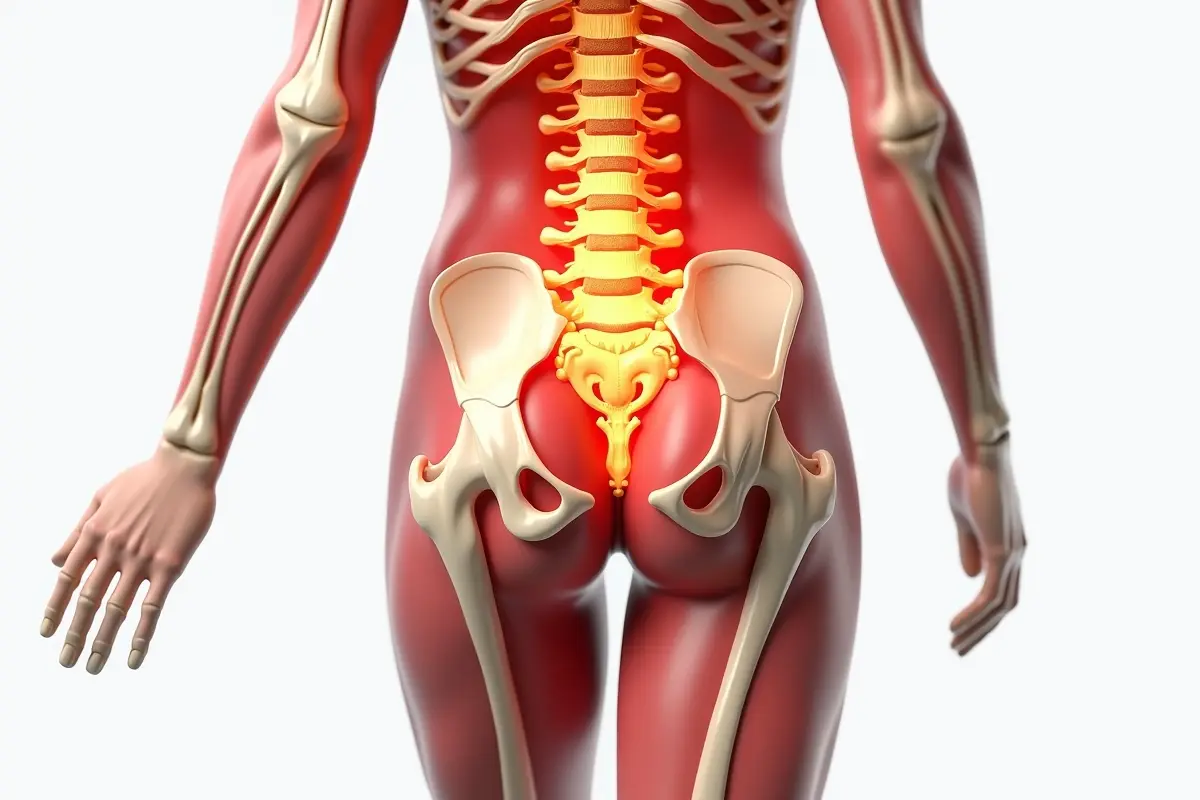
In fact, the sciatic nerve is the longest nerve in the body. It extends from the lower back down through the buttocks to down the back of each leg. The terminal nerves extend to the feet. Therefore, when it’s pinched or inflamed, be it from a herniated disc, a bone spur, tight muscles from piriformis syndrome, for example, it travels along the path of the nerve, it doesn’t just stop where it’s pinched.
This is why sciatica can be so confusing; someone might feel pain, a burning sensation down the calf, and spend three weeks treating their leg when in reality, their source of pain is at their lower back. This is also why treatment with a sciatica chiropractor tends to be more successful than worrying about leg pain, treatment focuses on what’s causing the nerve to fire in the first place.
The ability of pain to radiate, that electrical, shooting, deep aching pain, is referred pain; it’s how our nervous system knows to tell us there’s a problem (and unfortunately not where exactly the problem is).
Why It Travels
Another thing that confuses people is that sciatica can feel different from day to day. Some mornings it’s an achy hip. Other days it’s a sharp jolt from the low back to the knee or numbness/tingling in the foot instead of pain at all.
This happens because how compressed the nerve can be varies based on posture, movement and inflammation. We sit all day; we’re more likely to add pressure to our lumbar discs which is why sciatica so often flares after long rides or long days at a desk. Certain positions relieve the tension temporarily which is why people constantly shift throughout the day, they catch a break for a few seconds to relieve their discomfort.
Therefore, it does not mean that sciatica is spreading; it just means how much pressure is placed on those lumbar discs dynamically throughout the day changes.
What It Means for Treatment
This is important: Sciatica is related to a nerve problem that exists because of spinal compression, therefore any effective treatment must address the spine as well, alignment, disc health and whatever else is in play causing pressure on that nerve in the first place.
This is a very differentiating factor; pain medication can silence the signal, but it cannot take away what’s causing the signal. Stretching/exercise have real merit, but they come when it’s determined that the spine has proper alignment and there is no longer active compression of that nerve at that moment. The problem is skipping straight to treatment when it’s clear that there’s a structural source in play does not serve anyone well.
Chiropractic care addresses this mechanistic element. There are adjustments that can occur in the lumbar spine to relieve compression from whatever disc/joint/root is bothering the sciatic nerve root; when compression decreases, once again, so does pain, especially as it travels down and further along the leg.
Manual spinal decompression takes this one step further, gently creating space between vertebrae helps retract material of a herniated disc from projecting into the nerve root; it’s a targeted approach that makes sense with this knowledge.
The Recovery Process
Ultimately people want to know how long this will take to resolve and generally, that’s fair. The truth is it all depends on how long compression has existed and how much inflammation has developed over time.
Acute sciatica, stemming from some kind of movement, tends to respond relatively quickly while chronic sciatica where someone has had symptoms for months or years takes longer because it’s gotten more complicated over time. But this isn’t discouraging, just realistic; consistently treated nerves need time to calm down once compression is taken away.
What delays healing time even further is spending too much time treating the wrong symptom; if someone has leg pain for months without addressing their spine as a possibility, the nerve gets mad and treatment re-establishes itself at square one every time because no one ever assessed what was happening upstream first.
Putting Two and Two Together
Sciatica travels because nerves travel. There really is no leg pain, foot numbness, or hip ache, it’s all part of one conversation being held in different parts of your body and once people understand this concept, it changes how treatment can be approached and often times, that’s the game changer as people finally get stabilized day-by-day instead of symptom-management week-to-week.